Dreaming of a positive pregnancy test? Then of course you want to know when you have the best chance. Desiring children brings hope, excitement and sometimes a little uncertainty. Especially if you notice that you don’t get pregnant right away. You are only fertile for a few days per cycle. That makes getting lucky just a little less obvious than we sometimes think. Where one person has a positive test in no time, the other needs a little more patience. Calculating your fertile days gives you something to hold on to in a period full of expectations. It helps you to know when your ovulation occurs and when your body is most fertile. In this blog you will discover how to easily calculate your ovulation, what you need to know about your ovulation and how to increase your chances of getting pregnant!
Calculating your fertile days does not mean being frenetic about your desire to have children. It means understanding how your body works. And that very understanding can give you peace of mind. Because the more insight you have into your cycle, the less you have to question the timing.
When you calculate your ovulation, you can see when your body is preparing for possible fertilization. Your hormones are rising, your endometrium is building and your body is getting ready. Biologically, there is only a short period when an egg can be fertilized. If you know when that phase occurs, you can consciously choose when to give extra attention to intimacy. After that, you may also let it go.
During your cycle, an egg matures in one of your ovaries. When your body releases a spike of the LH hormone, that egg is released. That moment is called ovulation. On a 28-day cycle, this often happens around day 14, but if you have a shorter or longer cycle, this moment shifts with it. After ovulation, the egg is fertile for about 12 to 24 hours.
Sperm cells have a little more patience and can survive in your body for up to five days. This creates a fertile period of about five days before ovulation and the day itself. The greatest chance of pregnancy is usually in the two days before ovulation. This means that intercourse after ovulation is often less effective, as the egg may be gone by then. The days before ovulation are biologically the most promising.
Calculating your fertile days starts with understanding your cycle. An average cycle lasts 28 days, but anything between 21 and 35 days can be normal.
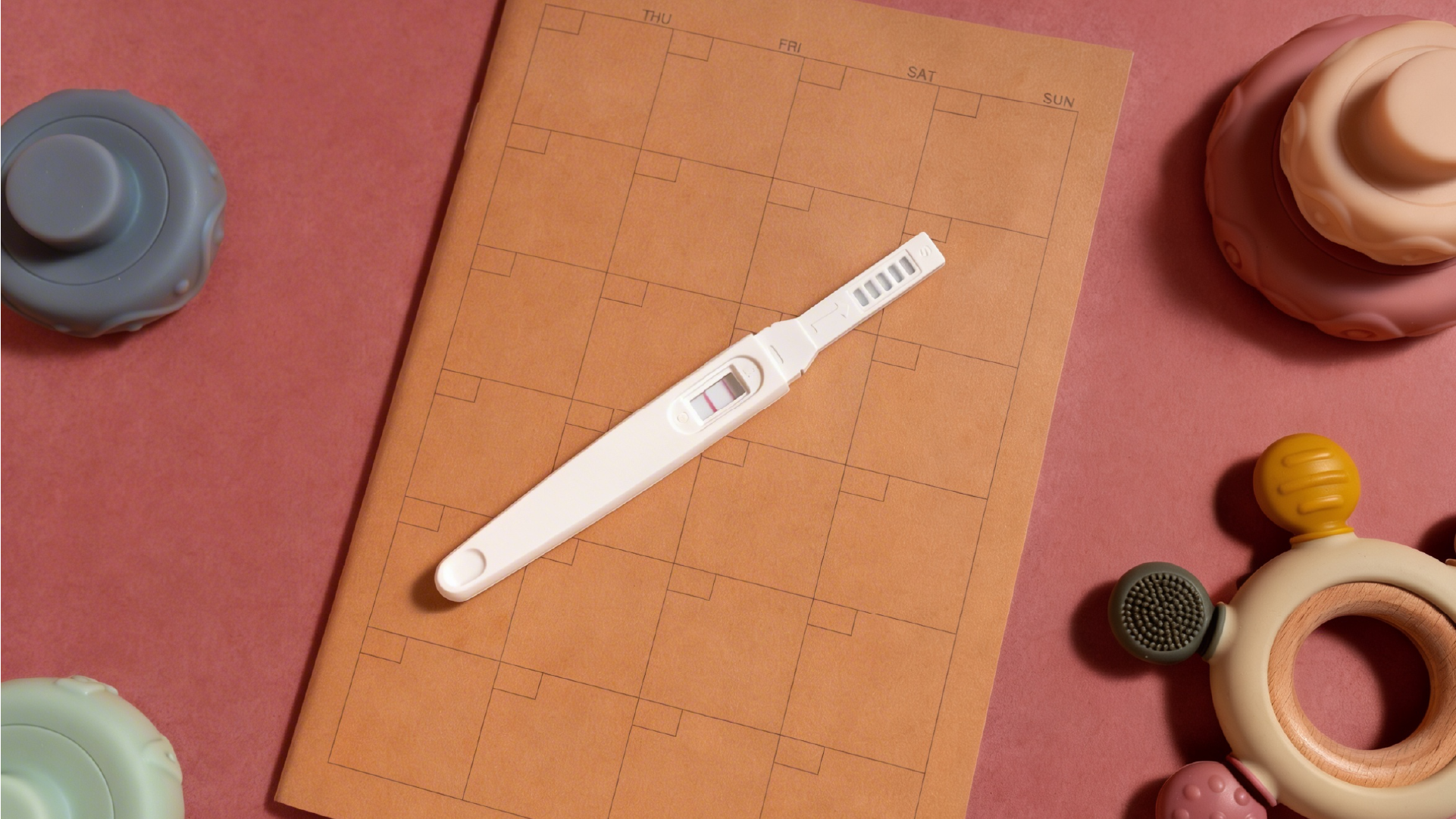
Want to calculate your ovulation with more certainty? Then also pay attention to physical signs. Think of slight ovulation pain, sensitive breasts or changes in your vaginal discharge that often becomes brighter and more elastic around ovulation. An ovulation test can additionally help measure the LH peak in your urine, allowing you to more accurately calculate your ovulation day.
Do you have an irregular cycle? If so, keep records for several months. Patterns often become apparent after three to six cycles. If necessary, you can use tools that measure hormone changes. This way, calculating fertile days becomes more reliable and you get a better grip on your own cycle.
Want to know more about calculating your fertile days or have other questions? Then feel free to contact us. We will be happy to help you!